
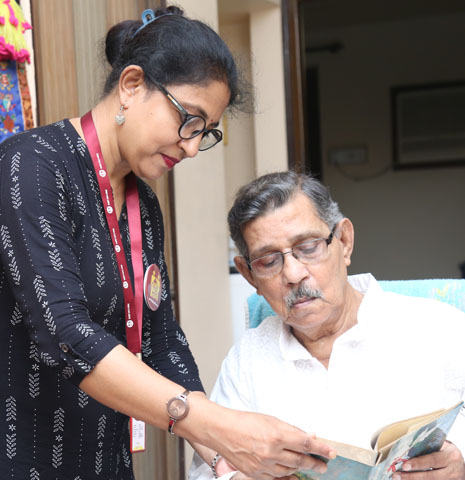
Elder Care Services in India for NRIs
For millions of Non-Resident Indians (NRIs), living abroad brings comfort and opportunity, but it also creates a constant emotional concern—how to take care of aging parents back in India.
Most NRIs face the same questions:
What happens if my parents fall sick suddenly?
Who will take care of daily needs?
Is home care enough or should we consider assisted living or nursing care?
India now offers multiple elder care options, but choosing the right one depends on health condition, independence level, and family involvement. This guide explains all major elder care options in India in a simple comparison format to help NRIs make the right decision.
1. Home Care Services (Most Preferred Option for NRIs)
Home care means professional caregivers or nurses visit or stay with your parents at their home and provide support for daily living and medical needs.
What it includes:
- Daily assistance like bathing, cooking, and feeding
- Medication reminders and health monitoring
- Basic nursing care and physiotherapy support
- Companionship and emotional support
- Doctor coordination and visit support
Best suited for:
- Parents who are mostly independent
- Families who want parents to stay in their own home
- NRIs who want remote monitoring and support
Advantages:
- Comfort of familiar home environment
- Emotional stability for elderly parents
- Flexible care based on requirement
- Cost-effective compared to institutional care
Limitations:
- Care quality depends on caregiver reliability
- Emergency handling may require external coordination
- Needs active monitoring and supervision from family or service provider
Home care is currently the most widely used elder care model in India because it allows aging in place while still providing support when needed.
2. Assisted Living Facilities (Growing Urban Trend in India)
Assisted living is a structured residential setup where senior citizens live in a managed community with medical and lifestyle support.
What it includes:
- Private or shared accommodation
- Meals and housekeeping services
- Medical assistance and emergency support
- Social engagement activities
- Security and 24/7 monitoring
Best suited for:
- Seniors who feel lonely living alone
- Parents who need regular supervision
- Families looking for structured care environment
Advantages:
- Safe and controlled environment
- Social interaction reduces loneliness
- Emergency support available on-site
- Reduces dependency on individual caregivers
Limitations:
- Emotional difficulty in leaving home
- Higher monthly cost
- Not suitable for seniors strongly attached to their home
Assisted living is still developing in India but is becoming more popular in metro cities where NRIs prefer structured and reliable care systems.
3. Nursing Homes (Medical-Level Continuous Care)
Nursing homes provide round-the-clock medical supervision for elderly individuals who require continuous healthcare support.
What it includes:
- 24/7 nursing care
- Medical monitoring and chronic disease management
- Post-hospitalization care
- Assistance with mobility and feeding
- Specialized care for conditions like dementia or paralysis
Best suited for:
- Seniors with serious medical conditions
- Bedridden or highly dependent patients
- Post-surgery recovery cases
Advantages:
- Full-time medical supervision
- Immediate response in emergencies
- Suitable for complex health conditions
Limitations:
- Less emotional comfort compared to home
- Institutional environment
- Higher dependency on medical staff
Nursing homes are necessary when health conditions require constant medical attention that cannot be managed at home.
4. Independent Caregiver or Local Attendant Services
This is one of the most commonly used informal systems in India where families hire individual caregivers or local agencies.
What it includes:
- Basic daily assistance
- Companionship
- Household help
- Medication reminders
Advantages:
- Lower cost
- Easily available in most cities
- Flexible arrangements
Limitations:
- Lack of training consistency
- No structured monitoring system
- High turnover of caregivers
- Emergency response is weak
This option works only when families actively supervise the arrangement.
5. Concierge and Elder Care Coordination Services (Modern NRI Solution)
This is the most advanced and rapidly growing model designed specifically for NRIs.
Instead of just providing a caregiver, these services manage the entire care ecosystem.
What it includes:
- Regular home check-ins
- Emergency coordination and response
- Hospital admission support
- Doctor appointment management
- Medicine tracking and reporting
- Family updates from India
Best suited for:
- NRIs living far away
- Families who need complete care management
- Parents living alone without local support
Advantages:
- End-to-end coordination
- Real-time updates for NRIs
- Faster emergency handling
- Reduced dependency on multiple service providers
Limitations:
- Requires trusted service provider
- Monthly subscription model
This model is becoming the most reliable solution for NRIs who cannot manage care directly from abroad.
Comparison Summary
Home Care
Best for independence + familiar environment
Moderate cost, flexible care
Assisted Living
Best for safety + community living
Higher cost, structured lifestyle
Nursing Home
Best for medical dependency
Continuous supervision required
Independent Caregiver
Best for basic daily help
Low cost but high risk
Concierge Care Services
Best for NRIs abroad
Complete management and peace of mind
How NRIs Should Choose the Right Option
Instead of choosing one solution blindly, NRIs should evaluate:
- Health condition of parents
- Level of independence
- Emergency risk level
- Availability of local support
- Frequency of medical needs
- Distance from family abroad
In many cases, a hybrid model works best—for example, home care combined with emergency coordination services.
How Buddy Back Home Helps NRIs
Managing parents from another country is not just about arranging a caregiver—it is about ensuring continuous safety, emotional comfort, and emergency readiness.
Buddy Back Home acts as a support system for NRIs by helping families:
- Monitor daily care of parents
- Coordinate emergency situations
- Ensure hospital and medical support
- Provide regular updates from India
- Reduce dependency gaps in absence of family
The goal is simple: to make sure your parents are never alone, even when you are far away.
Final Thoughts
There is no single “best” elder care option in India. The right choice depends on the health condition, emotional comfort, and level of independence of your parents.
However, for most NRIs, a combination of home care and structured support services offers the most balanced and reliable solution.